
-
 Plastic Injection Molds, 2K Molds, Die Casting Molds– Designing with concepts of Hasco and LKM standard.– DFM/3D mold model will be provide before molding making– Check on every step during mold making and molding samples.
 -
 From prototype to mass production 30 years.– 100+ CNC machining equipments– 15,000 ㎡ production base– 0.006 mm high precision tolerance
 -
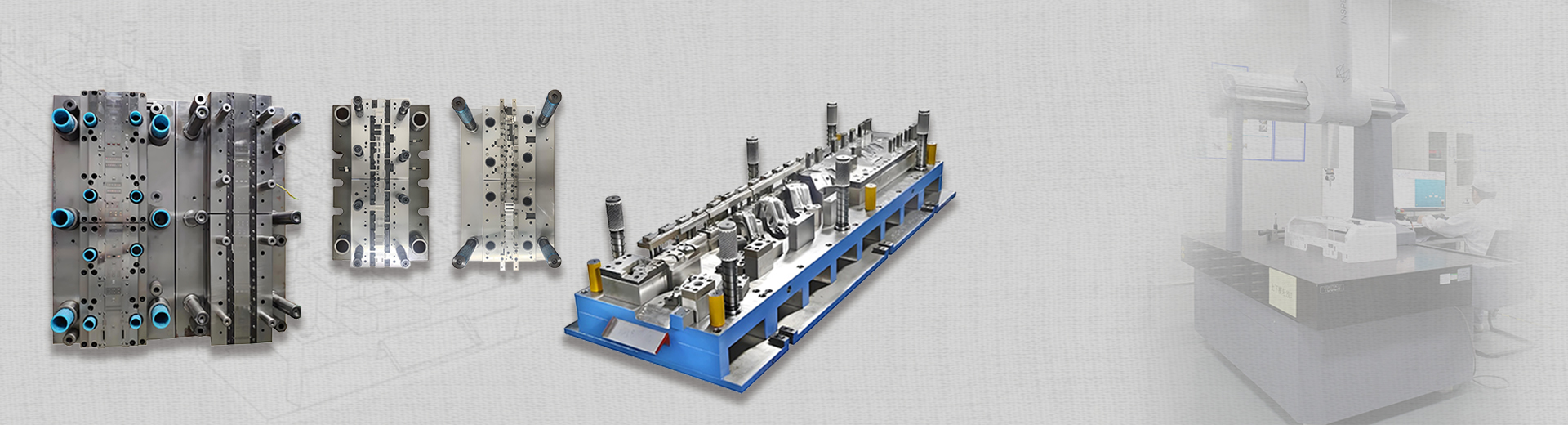 Provide you with high quality products and moulds.– ISO 9001 Certified & IATF 16949 Compliant– From 1 to 1,000,000+ Parts– Dedicated Engineering Support– Designing with concepts of Hasco and LKM standard.
 -
 Semiconductor Divison– Continuous innovation is the only way to grow up with customers!– Semiconductor devision is equipped with high level of duty-free workshop
 -
 The driving force in spring manufactureHigh performance springs for all applicationsAerospace&MedicalAutomotive&TransportationElectronics&TechnologyIndustrial Equipment&Automation
 -
 What Kind of Parts Manufacturing Company is SUNHUI?– 24/7 Uninterrupted Production Capacity– Dedicated Engineering Support– 30,000㎡+ Factory Floor Area– Business global expansion map
Semiconductor Divison
High tech
Continuous innovation is the only way to grow up with customers!SuiHui group also established Semiconductor division.We have rich experence to work with customer from electric system,high speed train,areo space industries.Our Semiconductor devision is equipped with high level of duty-free workshop and advance machines,we provide manufacturing from circuit design to hardware and packaging full solution manufacturing service.
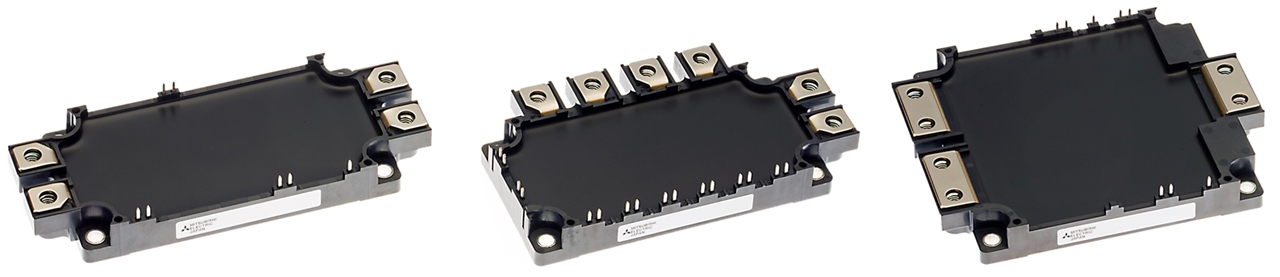
What is an Insulated Gate Bipolar Transistor?
The Insulated Gate Bipolar Transistor also called an IGBT for short, is something of a cross between a conventional Bipolar Junction Transistor, (BJT) and a Field Effect Transistor, (MOSFET) making it ideal as a semiconductor switching device.
The IGBT Transistor is a semiconductor device that takes the best parts of these two types of common transistors, the high input impedance and high switching speeds of a MOSFET with the low saturation voltage of a bipolar transistor.
It combines them together to produce another type of transistor switching device that is capable of handling large collector-emitter currents with virtually zero gate current drive.

Insulated Gate Bipolar Transistor Construction
We can see that the insulated gate bipolar transistor is a three terminal, transconductance device that combines an insulated gate N-channel MOSFET input with a PNP bipolar transistor output connected in a type of Darlington configuration.
As a result the terminals are labelled as: Collector, Emitter and Gate. Two of its terminals (C-E) are associated with the conductance path which passes current, while its third terminal (G) controls the device.
The amount of amplification achieved by the insulated gate bipolar transistor is a ratio between its output signal and its input signal. For a conventional bipolar junction transistor, (BJT) the amount of gain is approximately equal to the ratio of the output current to the input current, called Beta.
For a metal oxide semiconductor field effect transistor or MOSFET, there is no input current as the gate is isolated from the main current carrying channel. Therefore, an FET’s gain is equal to the ratio of output current change to input voltage change, making it a transconductance device and this is also true of the IGBT. Then we can treat the IGBT as a power BJT whose base current is provided by a MOSFET.
The Insulated Gate Bipolar Transistor can be used in small signal amplifier circuits in much the same way as the BJT or MOSFET type transistors. But as the IGBT combines the low conduction loss of a BJT with the high switching speed of a power MOSFET an optimal solid state switch exists which is ideal for use in power electronics applications.
Also, the IGBT has a much lower “on-state” resistance, RON than an equivalent MOSFET. This means that the I2R voltage drop across the bipolar output structure for a given switching current is much lower. The forward blocking operation of the IGBT transistor is identical to a power MOSFET.
When used as static controlled switch, the insulated gate bipolar transistor has voltage and current ratings similar to that of the bipolar transistor. However, the presence of an isolated gate in an IGBT makes it a lot simpler to drive than the BJT as much less drive power is needed.
An insulated gate bipolar transistor can simply be turned “ON” (conducting) or “OFF” (blocking) by activating or deactivating its electrically isolated Gate terminal.
By applying a small positive voltage signal across the Gate and the Emitter will keep the device in its “ON” state, while making the input gate signal zero or slightly negative will cause it to turn “OFF” in much the same way as a bipolar transistor or enhancement-mode MOSFET. Another advantage of the IGBT is that it has a much lower on-state channel resistance than a standard MOSFET.

IGBT Characteristics
Because the IGBT is a voltage-controlled device, it only requires a small voltage on the Gate to maintain conduction through the device unlike BJT’s which require that the Base current is continuously supplied in a sufficient enough quantity to maintain saturation.
Also the IGBT is a unidirectional device, meaning it can only switch current in the “forward direction”, that is from Collector to Emitter unlike MOSFET’s which have bi-directional current switching capabilities (controlled in the forward direction and uncontrolled in the reverse direction).
The principal of operation and Gate drive circuits for the insulated gate bipolar transistor are very similar to that of the N-channel power MOSFET. The basic difference is that the resistance offered by the main conducting channel when current flows through the device in its “ON” state is very much smaller in the IGBT. Because of this, the current ratings are much higher when compared with an equivalent power MOSFET.
The main advantages of using the Insulated Gate Bipolar Transistor over other types of transistor devices are its high voltage capability, low ON-resistance, ease of drive, relatively fast switching speeds, along with zero gate drive current.
Then the IGBT is a good choice for moderate speed, high voltage applications such as in pulse-width modulated (PWM), variable speed control, switch-mode power supplies or solar powered DC-AC inverter and frequency converter applications operating in the hundreds of kilohertz range.
| Device Characteristic | Power Bipolar | Power MOSFET | IGBT |
| Voltage Rating | High <1kV | High <1kV | Very High >1kV |
| Current Rating | High <500A | Low <200A | High >500A |
| Input Drive | Current, hFE 20-200 | Voltage, VGS 3-10V | Voltage, VGE 4-8V |
| Input Impedance | Low | High | High |
| Output Impedance | Low | Medium | Low |
| Switching Speed | Slow (uS) | Fast (nS) | Medium |
| Cost | Low | Medium | High |
IGBT vs MOSFET and Bipolar Transistor Comparison Table
We have seen that the Insulated Gate Bipolar Transistor is semiconductor switching device that has the output characteristics of a bipolar junction transistor, or BJT, but is controlled much like a metal oxide field effect transistor, or MOSFET.
One of the main advantages of the IGBT transistor is the simplicity by which it can be driven “ON” by applying a positive gate voltage, or switched “OFF” by making the gate signal zero or slightly negative allowing it to be used in a variety of switching applications. It can also be driven in its linear active region for use in power amplifiers.
With its lower on-state resistance and conduction losses as well as its ability to switch high voltages at high frequencies without damage makes the Insulated Gate Bipolar Transistor ideal for driving inductive loads such as coil windings, electromagnets and DC motors.